
China's Manufacturing Sector Faces 3 Million Welder Shortage: As Veteran Welders Retire, Who Will Take Up the Torch?
In 2026, China's manufacturing sector is confronting an unprecedented "welding talent crunch." Data from the Ministry of Human Resources and Social Security shows that the national welder shortage has exceeded 3 million people. Compounding this massive gap is the rapid aging of the welding workforce—the average age of technical workers in the construction industry has reached 55, with those born in the 1960s and 1970s accounting for 61% of all welders, while the post-90s generation makes up only 13%. Welders are retiring at a rate of approximately 100,000 per year, yet young people are scarcely entering the trade.
At the same time, demand for welding is surging. In the first quarter of 2026, China's shipbuilding industry received new orders totaling 59.53 million deadweight tons, a staggering 195.2% year-on-year increase, capturing 84.9% of the global market share. LNG carriers, large cruise ships, deep-sea drilling platforms—these "pillars of national strength" all depend on welding. "One shipyard we work with has LNG carrier orders worth over 200 billion yuan. If we rely solely on manual welding, production capacity simply cannot keep up," said an industry insider.
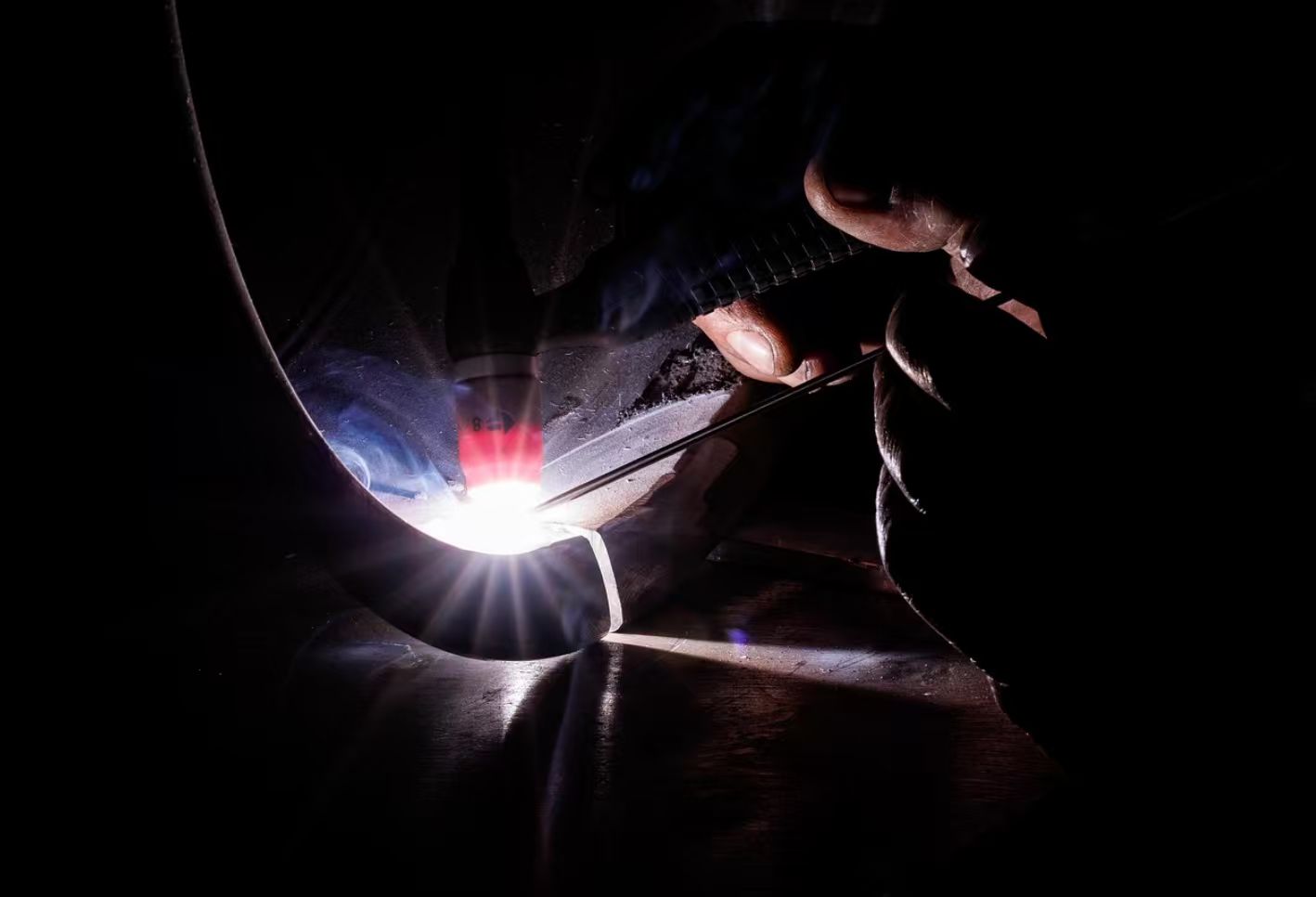
Although welders earn high salaries, young people prefer delivering food or driving ride-hailing services rather than stepping into workshops to hold a welding torch. Industry veterans point to the core of the dilemma: the harsh working environment and social perceptions have made this well-paid technical trade lose its appeal to the younger generation.
To break the deadlock, efforts must focus on two fronts: accelerating the training of more welding talent and making welding jobs more attractive. Wuhan ONEW Technology Co., Ltd., a representative player in China's welding simulator sector, is driving this transformation. Its ONEW-360 series welding training simulators offer multiple training systems, including shielded metal arc welding, CO₂ gas shielded arc welding, and TIG welding. These systems allow trainees to practice in a highly realistic environment, experiencing the actual welding process through visual, auditory, and tactile feedback, and effectively transferring skills to real-world applications.
ONEW's products have been adopted by numerous schools and training centers across the country. Since 2026, institutions such as Yunnan Vocational College of Mechanical and Electrical Technology and vocational colleges in Guangxi have successively purchased its virtual welding training equipment. In addition, the automotive VR virtual simulation training base in Kizilsu Kirghiz Autonomous Prefecture, Xinjiang, has also acquired automotive welding simulators.
With technologies such as virtual simulation and augmented reality, welding training is becoming safer, more efficient, and more repeatable—shedding the outdated image of "dirty, exhausting, and tough." As more young people can safely and efficiently master this craft on simulators, welding may truly transform from a "grunt job" into a "technology track" that the younger generation is eager to pursue—addressing the 3-million-person shortage at its root.